The Event Connection Funnel: Why Ticketing Apps & LinkedIn Fail at IRL Networking
TL;DR:
The Problem: Legacy ticketing tools (Luma, Partiful, Eventbrite) act as transactional dead-ends, causing 40%–50% RSVP flake rates and leaving attendees to sift through small talk. Meanwhile, LinkedIn lacks real-time spatial context.
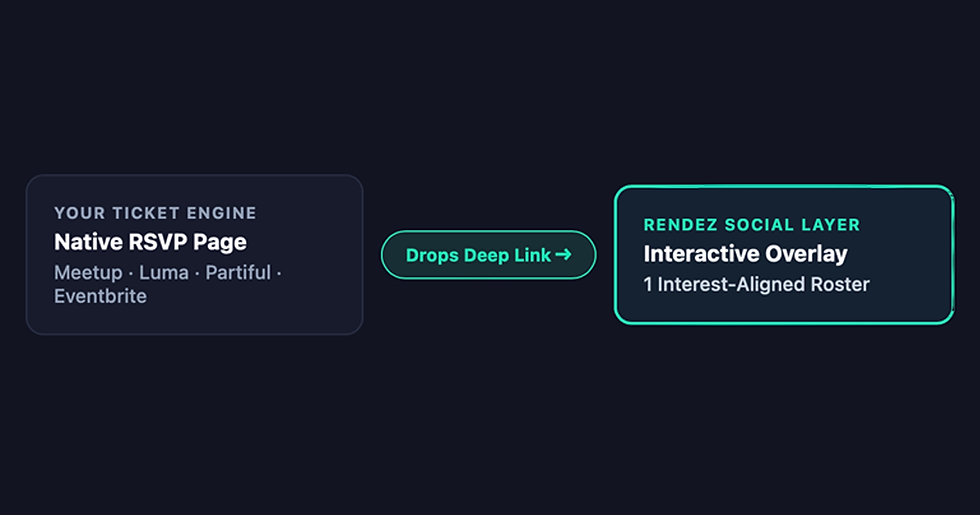
The Solution: Rendez is a 100% platform-agnostic social overlay that sits on top of any native RSVP page without changing your ticketing stack.
How It Works: Attendees align on professional and personal intent via dual-signal hashtags (#SeekingCTO, #Camping), maintain privacy with Zero-PII Emoji Avatars + Photoswap, and confirm in-room presence via a 0.5-mile spatial geofence.
Host & Attendee Benefits: $0 cost ($0 host SaaS fees, $0 ticket markups), zero audience poaching, legally protected non-marketing SMS, and instant permanent data purging.
When media planners and performance marketers analyze high-converting campaigns, they never evaluate a single touchpoint in isolation. They map the entire conversion funnel—tracing the user journey from an interactive billboard or social ad, through SMS updates, to landing page activation and final conversion. Every step in the multi-touch process must build momentum.
Yet in the event ecosystem, organizers and attendees are routinely handed a broken funnel.
An attendee sees an event, registers, receives an RSVP confirmation, and then hits a structural dead-end. Between the moment someone clicks "Register" on Luma, Partiful, or Eventbrite and the moment they step through the venue doors, the conversion funnel completely collapses.
The result? Free event flake rates consistently hover between 40% and 50%, while the attendees who do show up spend their first hour sifting through small talk to find the three people who actually match their goals.
Here is an analytical breakdown of why legacy ticketing engines, professional social networks, and single-use event apps fail at real-world (IRL) connection—and why a 100% platform-agnostic social overlay is establishing a new paradigm for event networking.
1. The Channel Breakdown: Why Legacy Platforms Fail the Funnel
Evaluating the modern event stack through the lens of user intent, privacy, and spatial proximity reveals why legacy platforms fail to activate the room.
A. Ticketing Engines (Luma, Partiful, Eventbrite, POSH)
The Flaw: They are built as transactional checkout engines, not human connection networks.
Host Taxes & Paywalls: Luma throttles invite sends to 500/week on free tiers and forces hosts onto $59/mo to $800/mo SaaS plans for scale. POSH and Eventbrite tack 5% to 15%+ processing markups onto ticket sales.
Audience Poaching: Partiful extracts attendees into shared "Mutuals" pools, while Luma and Eventbrite actively remarket competing events to your hard-earned guest list.
SMS Inbox Spam: Platforms harvest mobile numbers to trigger direct, uninvited text blasts into personal inboxes, forcing users into all-or-nothing "STOP" opt-out loops.
B. Professional Networks (LinkedIn)
The Flaw: Built for desktop messaging and asynchronous recruitment, not real-time physical proximity.
Paywalled Messaging: Messaging out-of-network event attendees is locked behind $39.99–$100+/month LinkedIn Premium or Sales Navigator subscriptions.
Zero Spatial Context: A LinkedIn Event page simply lists everyone who clicked 'Attend' months ago. It offers zero live verification, meaning you have no idea who actually showed up to the venue versus who stayed home in another state.
Conditional Blocking: Blocking an unwanted contact is conditionally disabled if users share mutual LinkedIn Events, Groups, or Follower relationships.
C. Enterprise & Single-Vertical Apps (Whova, Radiate, Timeleft)
Whova (Enterprise SaaS): Charges organizers $1,000–$3,000+ per event. It operates as a "ghost app"—downloaded out of obligation for a 3-day conference and immediately deleted.
Radiate (Festival Social): Drowns out professional and casual networking in "dating app creep," unshielded photos, and token paywalls ($7.99–$26.99).
Timeleft (Blind Dining): Charges $16–$35 per dinner pass or $20–$30/mo subscriptions just for table placement—forcing attendees into blind algorithmic matches without intent filtering or privacy shields.
2. How Rendez Solves the Event Funnel
By operating as an opt-in layer on top of native ticketing links, Rendez solves the structural flaws of event networking for both organizers and attendees:
A. For Organizers & Hosts
Platform Agnostic Utility: Sits seamlessly on top of Luma, Partiful, Eventbrite, POSH, or Meetup without requiring organizers to switch ticketing stacks.
$0 Utility Wedge: Eliminates host subscriptions ($59–$800/mo), ticket markups, invite volume caps, and enterprise SaaS quotes ($1,000–$3,000+).
Audience Ownership: Guarantees attendee rosters are never harvested, scraped, or remarketed to by competitor promoters.
K-Anonymity Safeguards: Aggregate reporting for organizers enforces a minimum threshold of 5 users per tag group and automatically excludes sensitive health, disability, or neurodivergence tags to protect attendee safety.
Live Google Places Venue Beacons: Illuminates active venue addresses on the in-app map during event hours, driving spontaneous foot traffic within a 0.5-mile radius.
B. For Event Attendees
Zero-PII Privacy Shield: Authenticates via passwordless SMS tokens. Users navigate with custom handles and Emoji Avatars, unlocking real photos only via mutual Photoswap.
Legally Binding Non-Marketing SMS Guarantee: Explicitly pledges in legal terms that mobile numbers will never be sold, rented, or used for promotional SMS marketing blasts.
Dual-Signal Hashtag Intent Engine: Dynamic profiles replace bios with deterministic tags that blend professional objectives (#SeekingCTO, #Founders) with personal affinities (#Camping, #DogLover, #Foodie). Shared interests illuminate in Green, unique interests appear in Orange, allowing guests to hit it off over shared hobbies before diving into business.
Verified 0.5-Mile Geofence: Live venue check-ins enforce a 0.5-mile physical radius to guarantee attendees are physically present in the room.
In-App Permanent Data Purge: When a user deletes their account, Rendez instantly executes a server-level wipe across active databases and contractually compels integrated infrastructure to purge all associated data.
Anti-Doomscroll Architecture: Contains zero public feeds, zero comment walls, and zero group chat clutter—engineered strictly for 1:1 IRL connection.
3. Definitive Ecosystem Comparison
The matrix below compares how a dedicated platform-agnostic social overlay stacks up against incumbent platforms across privacy, pricing, and spatial mechanics:
4. Upgrading Your Event Experience
Connecting your existing registration flow to a dedicated pre-event networking hub requires zero technical lift:
Submit Your Link (60 Seconds): Drop your native event link (Luma, Partiful, Eventbrite, Meetup, POSH) via 👉 List or Suggest an Event on Rendez.
Receive Your Custom Deep Link: Rendez maps your venue location (or sets a general city/state area if your exact address is hidden) and returns a deep link.
Embed in Your Description: Paste the link into your RSVP page or confirmation email:
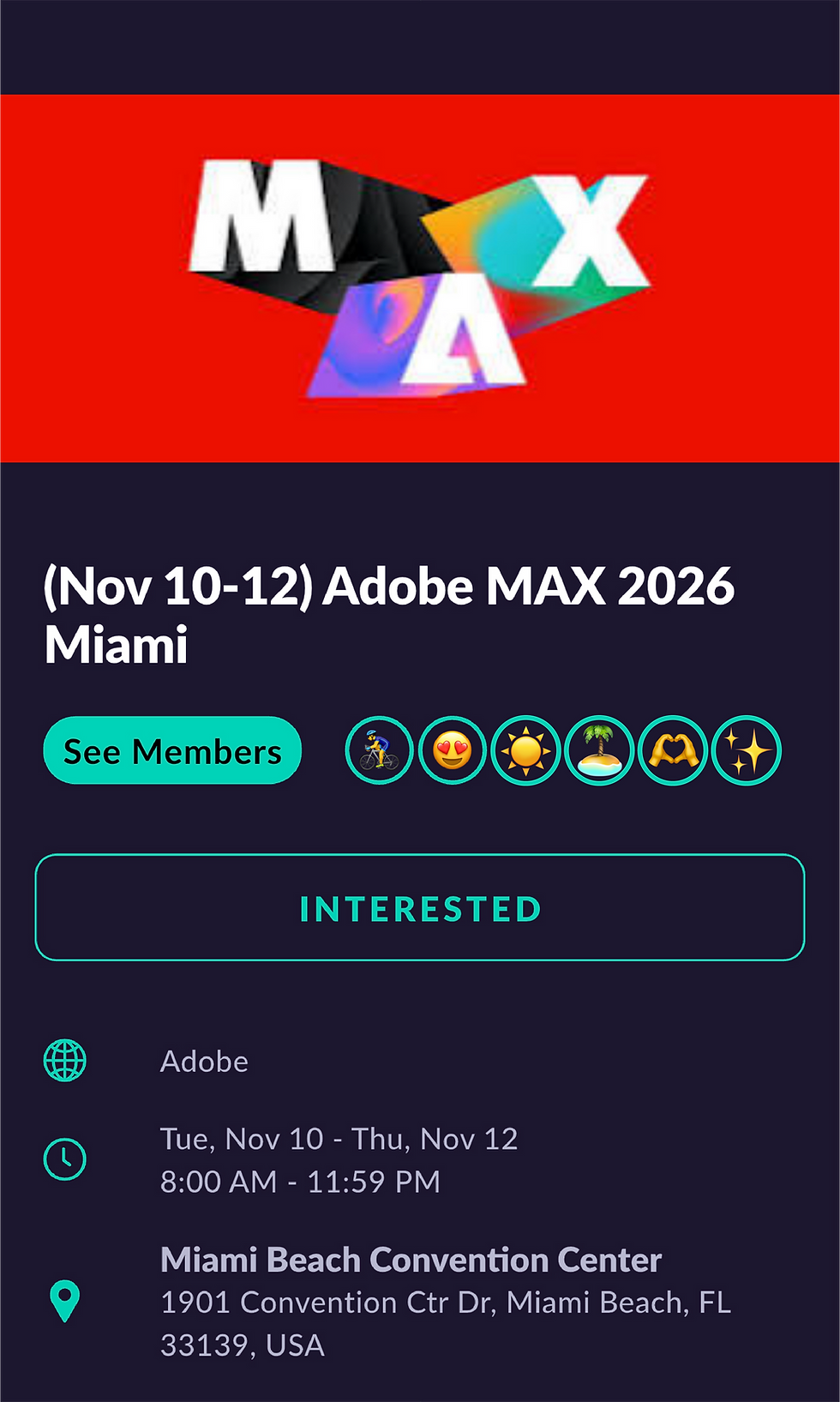
"Want to choose how you're found, connect with other attendees, and plan meetups before doors open? Mark Interested on our Rendez Pre-Event Networking Hub here: [Your Deep Link]"
Frequently Asked Questions:
Why is a social overlay better than native ticketing chat?
Native ticketing chats (like WhatsApp drops or comment walls) quickly devolve into noisy, unstructured group spam. A social overlay provides structured, Zero-PII intent alignment (#SeekingCTO, #Camping) and verified 0.5-mile spatial check-ins for high-signal 1:1 connections.
How does Rendez guarantee non-marketing SMS use?
Unlike legacy platforms that harvest mobile numbers for promoter text blasts, Rendez explicitly guarantees in its Privacy Policy that phone numbers are used solely for single-factor SMS authentication and will never be used for promotional marketing.
How does account deletion work on Rendez?
When an attendee deletes their account, Rendez executes an immediate, permanent server-level purge across active databases and contractually compels integrated third-party infrastructure to wipe all associated data.